Now Reading: AI Propaganda in the U.S.-Iran War: Truth Lost in the Feed
-
01
AI Propaganda in the U.S.-Iran War: Truth Lost in the Feed

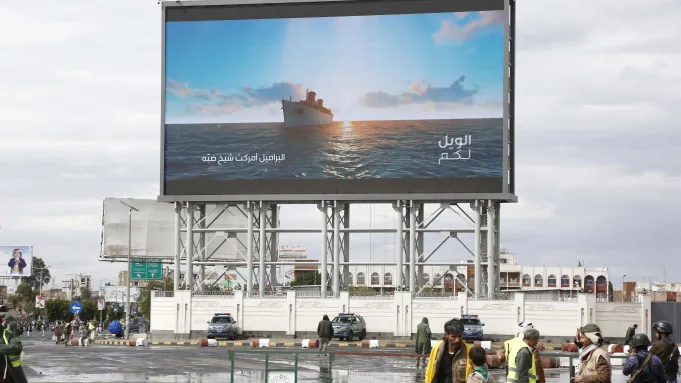
Nella guerra USA-Iran l’intelligenza artificiale trasforma propaganda, deepfake e disinformazione in un’arma che altera la percezione stessa della realtà.
There was a time when propaganda came after war: it was used to narrate it, justify it, clean it up. Now it comes first. It floods your feed, shows you the American aircraft carrier exploding, the missile hitting its target, the enemy leader already dead, and only afterward — maybe — reality gets a chance to speak. The problem is that, by then, the lie has already racked up millions of views.
The information war between the United States and Iran is showing this leap in quality with almost textbook brutality: the battle is no longer fought only on the ground, but inside an industrial chain of images, clips, memes, chatbots, fake accounts, and low-cost manipulations. Artificial intelligence is not a side dish to the conflict. It has become one of its most effective force multipliers.
The USS Abraham Lincoln case says it all. A video circulated online showing the aircraft carrier being hit and destroyed in a Hollywood-style fireball. Except the ship was still there, intact, operational, alive. Dead only inside the cinematic hallucination of social media. And that is the point: the lie does not have to be perfect, it only has to be spectacular enough to outrun verification.
Deepfakes, “shallow fakes,” and feed-based warfare
According to NewsGuard, in the first 25 days of the conflict, 50 false claims were tracked, increasingly boosted by AI-generated or AI-manipulated content. This is not just about classic deepfakes: the next level is even more insidious, because it works on real material, relocates it, strips it from context, bends it just enough to alter the meaning of events. It is the fake disguised as evidence.
Meanwhile, inside Iran, the very possibility of verification is shrinking. Cloudflare documented Iranian internet traffic collapsing to near-zero levels during the blackout imposed by the regime. Translation: while images of war exploded outside the country, the windows from which to verify them were being shut from within. Perfect propaganda is not the kind that convinces everyone. It is the kind that leaves everyone else without the tools to disprove it.
Anyone following the issue of deepfakes and digital identity already knows where this trajectory leads: toward a public sphere in which the burden of proof becomes impossible and trust falls apart. If everything can be fake, then truth itself stops mattering.
The problem is not just Tehran
The easy temptation would be to tell it like this: on one side the Iranian regime distorting reality, on the other the West defending it. A comforting fairy tale, but still false. Because Washington, too, has chosen to play with the toxic grammar of spectacle. ABC News documented the White House’s “hype videos”: real footage from operations in Iran edited together with scenes from Call of Duty, with no clear distinction between actual war and simulated war.
This is where the decay becomes almost grotesque: war reduced to content, bombing reduced to aesthetics, the dead reduced to clips. Ben Stiller protested when one of those videos also featured Tropic Thunder. He was right to do so: war is not a franchise, but contemporary power has understood that if you package it as entertainment, it becomes easier to swallow.
And so the harshest reaction did not come from the usual professional commentators, but from veterans and military families. The Washington Post captured their outrage at a style of communication that turns conflict into a moral video game: we strike, you applaud, everybody scrolls.
When AI also “verifies” the lie
The final paradox is the most poisonous one: AI is not only being used to manufacture fakes, but also to validate them badly. And so the average citizen ends up crushed between state propaganda, platform algorithms, and chatbots making mistakes with the confidence of a notary. That is the real power of algorithms: not to tell you directly what to think, but to saturate the environment until truth becomes just one version among many.
Even Donald Trump, according to Reuters, accused Iran of using AI as a weapon of disinformation. A plausible accusation. But when it is made while his administration packages war like a movie trailer and attacks unfriendly media, it sounds less like a defense of truth and more like a fight over who gets to hold the remote.
In digital war, the winner is not the one who tells the facts best, but the one who manages to contaminate them enough to make you doubt everything. And when reality is forced to compete with propaganda on the terrain of spectacle, it starts the race already behind.