Now Reading: Black Holes: How They Really Work and Why They Warp Everything
-
01
Black Holes: How They Really Work and Why They Warp Everything

What black holes are and how they really work: event horizon, formation, and their role in the universe explained in a clear and up-to-date way.
Black holes are among the most extreme objects in the universe, but they are not “cosmic vacuum cleaners” that randomly swallow everything. They are regions of space where gravity becomes so intense that not even light can escape beyond a boundary called the event horizon. That is exactly where the fascination of black holes comes from: they look like cosmic monsters, but in reality they obey the laws of physics. They just push them to the limit.
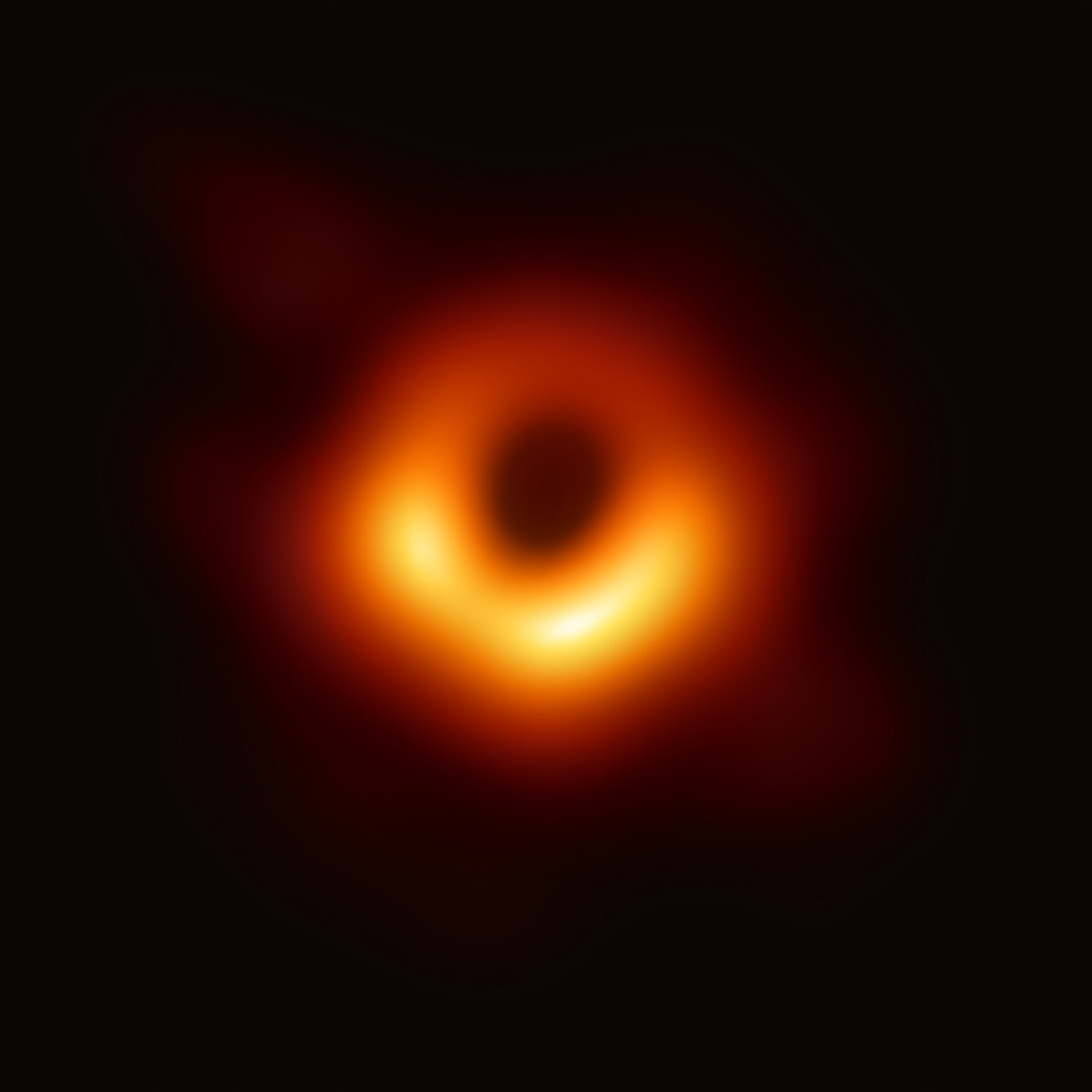
In recent years we have observed them better than ever: from the work of the Event Horizon Telescope, which showed the shadow of supermassive black holes, to the gravitational-wave detections of LIGO, which allowed us to “hear” the merger of these objects. And the more we study them, the more a simple truth emerges: black holes are not just an astronomical curiosity. They are natural laboratories where space, time, matter, and energy stop behaving intuitively.
- What a black hole really is
- How a black hole forms
- What is inside: horizon, disk, singularity
- The main types of black holes
- How we can see them if they emit no light
- What happens if you get too close
- Why black holes matter so much
- Frequently asked questions
What a black hole really is
A black hole is a region of space-time where an enormous amount of mass is concentrated into such a small volume that space is curved in an extreme way. According to NASA, the decisive boundary is the event horizon: a “surface” beyond which there is no longer any way out.
Here we need to avoid an oversimplification that is everywhere: a black hole does not automatically “suck in” everything. If a black hole with the same mass as the Sun suddenly replaced the Sun, Earth would keep orbiting in almost the same way. The difference is not some devouring magic, but the fact that, when you get very close, gravity becomes devastating and alters the behavior of light and matter.
In other words, a black hole is the point where gravity stops being a “normal” phenomenon and becomes an extreme condition of physical reality. That is why astronomers care so much about it: it is one of the few places in the universe where Einstein’s general relativity is pushed to its most radical limits.
How a black hole forms
The best-known case is that of stellar-mass black holes. When a very massive star runs out of nuclear fuel, it can no longer support its own weight. The core collapses under the force of gravity and, if the remaining mass is sufficient, a black hole can form. It is one of the possible endings of a star’s life, along with neutron stars and other stellar remnants.
But there are also much larger black holes. Supermassive black holes, found at the centers of many galaxies, have masses ranging from millions to billions of times that of the Sun. Their formation process is still not fully understood: they may arise from the gradual growth of smaller black holes, from successive mergers, or from the direct collapse of enormous gas clouds in the early universe. Observations by ESA and James Webb have strengthened the idea that some of these objects began growing very early in cosmic history.
In recent years, increasingly solid evidence has also emerged for black hole mergers. The gravitational interferometers of the LIGO-Virgo-KAGRA collaboration have recorded hundreds of events, many of them consistent with collisions between black holes. In 2025, an exceptionally massive merger was also announced, with a final black hole of about 225 solar masses, a sign that these objects can also grow by cannibalizing one another.
What is inside: horizon, disk, singularity
When talking about the structure of a black hole, it helps to distinguish three elements.
- Event horizon: this is the point of no return. Once crossed, no information can ever reach an outside observer again.
- Accretion disk: often around the black hole there is a disk of gas and dust that heats up to extremely high temperatures as it falls toward the center. It is precisely this incandescent material that makes the system “visible.”
- Singularity: this is the central region predicted by classical models, where density and the curvature of space-time become extreme. But this is where current physics breaks down: general relativity and quantum mechanics have still not been reconciled.
The most interesting part is that the black hole itself emits no light. What we often observe is the environment around it: superheated gas, particle jets, disturbed stars, or matter accelerating until it produces X-rays. NASA emphasizes exactly this point: the main luminous signal associated with a black hole almost always comes from the material orbiting around it, not from inside it.
As for the famous Hawking radiation, it is an extremely important theoretical prediction, but it has never been directly observed in an astronomical black hole. So citing it as an experimental fact would be incorrect. Today it remains one of the most fascinating hypotheses in the attempt to unite gravity and quantum physics.
The main types of black holes
Not all black holes are the same. In astronomy, three broad categories are usually used.
- Stellar-mass black holes: they form from the collapse of very massive stars and have masses of a few to a few dozen times that of the Sun.
- Intermediate-mass black holes: they are rarer and harder to confirm, but they fill the gap between stellar and supermassive ones.
- Supermassive black holes: they are found in galactic nuclei and can weigh millions or billions of solar masses.
The black hole at the center of the Milky Way, Sagittarius A*, belongs to the last category. In 2022, the Event Horizon Telescope released its first direct image. In 2024, the same collaboration also showed polarized-light data, useful for understanding the role of magnetic fields around the event horizon.
Meanwhile, missions such as ESA’s Gaia have identified new candidates close to Earth by studying the anomalous motion of stars. This is a key point: a black hole is often discovered not because we see it directly, but because we see how it alters what is around it.
How we can see them if they emit no light
The question is legitimate: if a black hole lets not even light escape, how do we know it exists? The answer is that we observe its effects.
- We observe the hot gas falling into the black hole and becoming bright in X-rays or radio waves.
- We measure the motion of stars orbiting an invisible but extremely massive object.
- We detect gravitational waves produced when two black holes spiral together and merge.
- We image their shadow, meaning the silhouette of the black hole against the background of the surrounding luminous matter.
That is how science moved from theoretical idea to observational proof. The signals from LIGO-Virgo-KAGRA showed that black hole collisions are a real and frequent phenomenon in the cosmos. The images from the EHT, meanwhile, gave visual form to something that for decades had only been inferred.
It is one of the most beautiful cases in modern science: first theory says “this should exist,” then technology finally manages to intercept its signature.
What happens if you get too close
Here we enter the territory that made black holes famous even outside astronomy. As you approach a black hole, gravity changes enormously between one part of the body and another. These differences are called tidal forces. If they become extreme, an object would be stretched out in a process nicknamed spaghettification.
In a stellar black hole, this effect would become lethal before or near the event horizon. In a supermassive black hole, by contrast, the gravitational gradient at the horizon can be less abrupt, at least initially. But the point does not change: once that boundary is crossed, no information would ever reach the outside again.
There is another aspect that pushes our intuition into crisis: near a black hole, time passes differently compared with a distant observer. This is a real effect predicted by general relativity. So black holes do not just bend matter: they bend time as well.
Why black holes matter so much
Black holes matter because they force physics to reveal itself without filters. They are the place where we best understand what gravity can do, how matter behaves under extreme conditions, and how much we still do not know about the universe.
But they matter for another reason too: they are not marginal objects at all. Supermassive black holes seem to play a deep role in the evolution of galaxies. They can influence star formation, heat the surrounding gas, launch energetic jets, and shape the cosmic environment on immense scales. They are not exotic details at the edges of the cosmos: in many cases they are among its hidden architects.
And this is exactly where the topic becomes truly fascinating. Studying a black hole means looking at the point where our understanding of the universe works extremely well — up to a certain limit — and then breaks apart. Beyond that limit, the physics we know is no longer enough. And that, more than the spectacular image or the science-fiction metaphor, is the real reason black holes continue to obsess us.
Frequently asked questions about black holes
Does a black hole suck in the entire universe?
No. A black hole exerts gravity according to its mass, like any other object. It becomes devastating only if you get close enough.
Can you see a black hole?
Not directly like a star. But you can see its effects on the surrounding matter and, in some cases, its shadow against the bright background of the accretion disk.
Is the black hole at the center of the Milky Way dangerous for us?
No. Sagittarius A* is very far from Earth and does not pose a direct threat to the Solar System.
Do black holes destroy information?
It is one of the great open questions of theoretical physics. The so-called “information paradox” is still under study.
Sources
- NASA – Black Hole Anatomy
- Event Horizon Telescope
- EHT – First image of Sagittarius A*
- LIGO – End of the fourth observing run and merger results
- LIGO – Most massive black hole merger observed
- ESA – Gaia and the discovery of a new family of black holes
- ESA/Webb – Supermassive black holes in the early universe