Now Reading: Earth Day 2026: the real numbers behind Earth Day
-
01
Earth Day 2026: the real numbers behind Earth Day

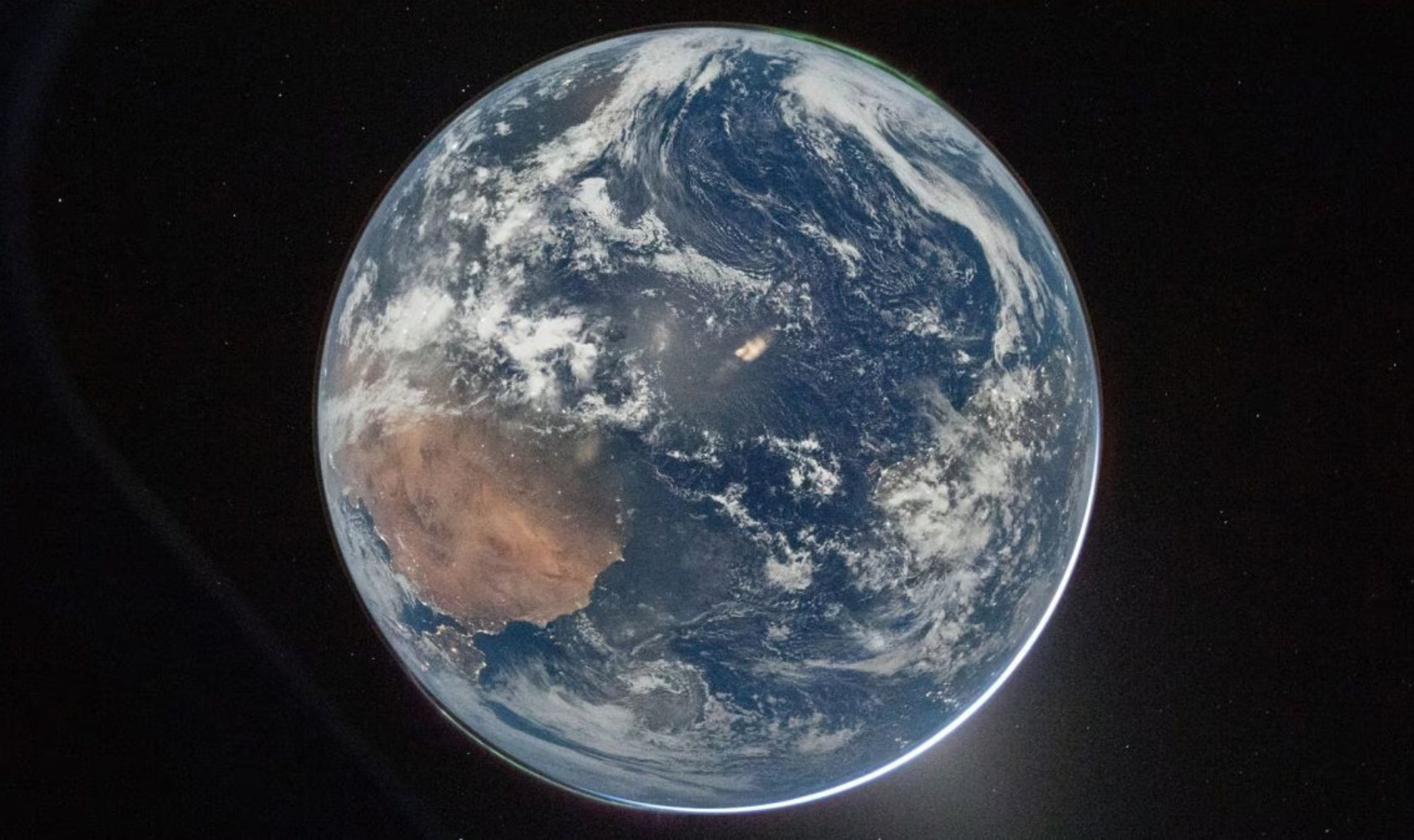
Earth Day 2026: official theme, climate data, energy, renewables, and power grids. Fortunately, Artemis II has given us a new family portrait.
April 22, 2026 marks the 56th Earth Day. The official theme chosen by EARTHDAY.ORG is “Our Power, Our Planet”. This year’s central point is very clear: energy, local communities, the resilience of territories, and tangible resources. The official initiatives began on April 18 and continue throughout Earth Week.
The UN also reminds us that April 22 is International Mother Earth Day, a recurrence recognized by the General Assembly in 2009. The framework outlined by the United Nations is precise: ecosystem restoration, climate change mitigation, biodiversity protection, and reducing environmental damage that directly affects economies, public health, and food security.
Earth Day turns 56, but the numbers are those of an emergency
Earth Day began in 1970. According to the official account by EARTHDAY.ORG, the first event mobilized 20 million Americans, equal to about 10% of the U.S. population at the time. That wave helped open the season of major environmental laws in the United States and contributed to the creation of the EPA. Today, the event’s network reaches more than 190 countries.
The problem is that in 2026 this anniversary falls within a climate context far worse than what was described for years as a future risk. The World Meteorological Organization writes that the 2015–2025 period was the set of the eleven hottest years ever recorded. 2025 ranks as the second or third hottest year in the historical series, with a global average temperature of about 1.43°C above the 1850–1900 average.
Copernicus also confirms the weight of the data: in its dataset, 2025 is the third hottest year ever recorded, with a global average temperature of 14.97°C, equal to +0.59°C compared with the 1991–2020 average. Copernicus adds that in 2025 surface air temperatures were above average across 91% of the planet.
The WMO also reports that the ocean continues to warm and absorb carbon dioxide, with an energy accumulation over the last two decades equal each year to about eighteen times humanity’s annual energy consumption. On the cryosphere front, Arctic sea ice extent remained at or near record lows, while Antarctic sea ice extent was among the lowest ever observed. For those who want to understand how directly the environmental issue affects infrastructure, technology, and systems of power, Terza Pillola has already published pieces on how much energy the internet consumes, on what data centers are, and on the Big Tech race for artificial intelligence.
Energy, grids, data centers: this is where the seriousness of Earth Day 2026 is measured
This year’s official theme points openly to energy. And here too, the data are very concrete. The International Energy Agency forecasts that global electricity demand will grow by an average of 3.6% per year between 2026 and 2030, after +3% in 2025. Among the factors cited by the agency are industry, electric vehicles, cooling, and above all data centers.
The IEA explicitly states that in advanced economies electricity demand is rising again after fifteen years of stagnation, and it identifies AI, data centers, and advanced manufacturing among the main drivers. The point is simple: the digital economy demands more power, more grids, more connection capacity, and more stability. That makes the issue of renewables and system efficiency even more relevant.
On that front, some numbers are actually moving. According to Ember’s Global Electricity Review 2026, in 2025 renewables reached 33.8% of the global electricity mix, overtaking coal for the first time, which stood at 33.0%. It is a concrete figure, but it is not enough to settle the matter.
In 2025 the world installed 165 GW of new wind power capacity, an increase of 40% compared with 2024. China alone added 120.5 GW, while Europe stopped at 19 GW. Yet the same industrial picture says that to triple renewable capacity by the end of the decade, the world would need about 320 GW of new wind power per year, nearly double the current pace.
In Europe, solar power is still pushing ahead. The IEA estimates that in 2025 the European Union added almost 85 GW of new renewable capacity, nearly 70 GW of it from solar. Germany added 17 GW, Spain 14 GW. At this point, the bottleneck is no longer just producing energy, but connecting it. Again according to the IEA, more than 2,500 GW of projects involving renewables, storage systems, and large loads remain stuck in electricity grid connection queues around the world.
The most relevant news around Earth Day: money, oil, raw materials
Earth Day 2026 arrives while three very concrete battles are moving. The first concerns climate finance: shareholders of the World Bank are trying to preserve in some form the institution’s climate financing strategy after its official expiration expected at the end of June. The funds and rules used to finance adaptation and transition remain an open field of political and financial conflict.
The second concerns fossil fuels. In the Netherlands, a group of climate activists has launched a new lawsuit against Shell, demanding an immediate halt to investments in new oil and gas projects. The message is clear: major energy companies remain under judicial pressure just as the climate timeline keeps tightening.
The third battle concerns critical minerals. An agency co-funded by the European Union and EIT RawMaterials is working with Metalshub on a European platform for benchmark pricing of critical minerals detached from China. The reason is simple: today Beijing accounts for about 90% of global processed rare earth production. Without materials, there is no energy transition. And without more stable supply chains, the Earth Day slogan remains hanging on posters.
The real issue on April 22, 2026
Carl Sagan would have recognized the emotional force of the Artemis II Earth image immediately. As NASA’s crewed lunar flyby sent back fresh views of our planet in April 2026, the photograph echoed the same perspective that made Sagan’s Pale Blue Dot monologue unforgettable: Earth suspended in darkness, fragile, distant, and impossibly small against the scale of space.
It reminds viewers that every border, every war, every economy, every ambition, and every environmental crisis still unfolds on one exposed world. That is why the image matters beyond its beauty. It reconnects Earth Day to a cosmic truth Sagan expressed better than almost anyone: our planet is not an abstraction, but a single inhabited speck, and the responsibility for what happens here remains entirely ours.
Earth Day 2026 matters if, after the ritual of the day, the data remain on the table: 1.43°C above pre-industrial levels in 2025, 33.8% of global electricity from renewables, 165 GW of new wind power installed in a single year, 2,500 GW of projects blocked in connection queues, and a growing race for data centers, grids, and electricity consumption. It matters if environment, energy, industry, and power are kept together in the same frame. Because the climate does not move through press releases. It moves through numbers, grids, courts, balance sheets, and raw materials.