
Now Reading: Twinnin: how to sell your face in the age of AI
-
01
Twinnin: how to sell your face in the age of AI

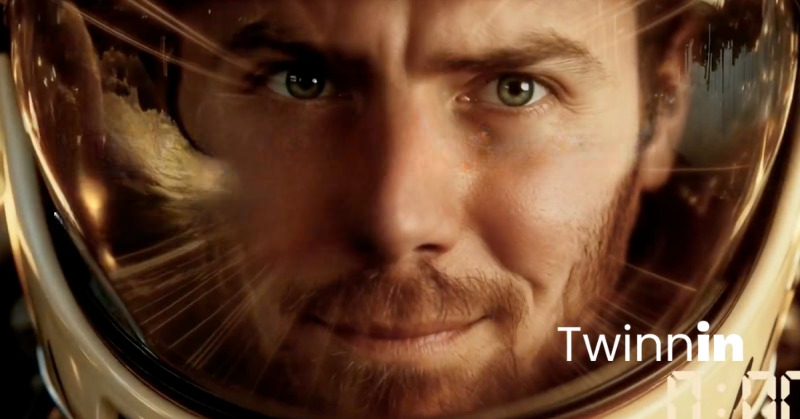
Twinnin promises to protect and monetize actors’ likenesses in the AI era, but the case is opening clashes over consent, minors, and digital rights
Twinnin is a platform for actors that promises to “protect and monetize human identity in the age of artificial intelligence,” but its arrival has already sparked a clash in the British audiovisual sector. The issue is not just the technology: it is the way a digital likeness is collected, registered, offered to studios and brands and, above all, the fact that the system also touches on the issue of minors. The case matters because it comes at a time when film and TV are still trying to establish stable rules on scans, consent, and the commercial exploitation of faces.
How Twinnin actually works
Twinnin clones an actor’s face and creates an “identity record” protected by what the company describes as “immutable provenance technology,” that is, a system designed to certify the origin, ownership, and authorization for the use of the likeness. That digital face can then be licensed to studios or brands for use in series, films, or advertising.
The platform is run by AI Kat, a tech company backed by venture funding from Google and Nvidia. Founder Katrien Grobler says that both approved the project. On the user side, actors can sign up by paying $14.99 a year to upload their digital likeness and receive callouts. Studios and brands, meanwhile, access the platform through tiered subscriptions: the creator plan starts at $499 a month, while the enterprise plan goes up to $1,200 a month. According to Grobler, it is this latter plan that meets the required standards on the AI guardrails front.
The founder’s argument is clear: instead of allowing the industry to use faces without control, Twinnin would offer a way to claim ownership, consent, and compensation. Grobler says the platform allows actors to “own their identity in the age of AI” and claims that, in court, Twinnin can prove that the face was licensed by the rights holder. She says she had been working on digital twins for about a year and came up with the idea for Twinnin at Christmas; from that point, AI Kat’s team allegedly took the project from concept to launch in about three months.
According to Grobler, the service would not take work away from actors but would place itself between person and automation, offering a tool that is “ethical” and based on consent. Her argument is also economic: when budget interests come into play, she says, ethics alone are not enough; that is why a platform would be needed to structure face licensing in a formalized way.
Reactions, criticism, and unresolved issues
Before launch, news of Twinnin had already circulated among actors, agents, producers, and unions, becoming a divisive topic. Part of the debate exploded after the agency Lacara promoted the platform to unrepresented actors, including the parents of performers under 18, through a message on Spotlight. In the text, reviewed by Deadline, Lacara argued that if AI is going to use human likenesses, then they should be the likenesses of real people, protected and paid, not synthetic bots, even inviting people to “sign up the whole family.”
After protests from some actors, Spotlight sent a notice to its members urging them to exercise “extreme caution” before uploading data or likenesses to third-party platforms. It also clarified that it has no partnership with Twinnin and has not validated external AI likeness services. For its part, Lacara’s head, Anya Taylor, denied any partnership with Twinnin and described the offer as purely optional, unrelated to representation. Her position is that confronting these changes is better than ignoring them, in order to keep real people inside the future of the industry instead of allowing them to be replaced.
The most sensitive issue, however, concerns minors. Lacara works mainly with child actors, and this triggered alarm within the Agents of Young Performers Association. The association said that cloning the likeness of someone under 18 raises serious ethical issues regarding a minor’s consent, as well as safeguarding risks: misuse, manipulation, or unauthorized replication of the image, both now and in the future. It also raised doubts about licensing and compliance with rules that protect minors at work, urging parents not to join initiatives of this kind for now.
Grobler responds that Twinnin includes very strict guardrails for minors. She says that only those subscribing to the most expensive enterprise plan will be able to access under-18 profiles; that every request involving a minor will be handled personally by her through a Zoom call; that nothing on this front will be automated; and that children will not be shown on the platform, but only through avatars.
The question of trust, however, remains open. The case comes at a time when AI actors are already entering the industrial debate, with examples such as Tilly Norwood and her “Tillyverse”. In the United States, SAG-AFTRA secured significant AI protections more than two years ago; in the United Kingdom, by contrast, Equity has still not reached an agreement with Pact. The union recently consulted its members about their willingness to refuse digital scans on set in order to secure adequate protections.
On Twinnin, Equity has maintained a cautious but not dismissive stance. It has taken the opportunity to criticize the government’s slowness and said it is continuing to work to introduce new personality rights that would give performers a clear path to protecting their likeness. At the same time, it observed that while governments and producers are dragging their feet, companies are emerging that seek to respond to the demand for protection, rights, transparency, and consent in the online use of images. And this is precisely where the Twinnin case connects to broader issues already visible in the debate on deepfakes, digital identity, and image rights.
What this case shows
Twinnin does not open a theoretical discussion: it puts on the table a market already ready to buy digital faces through a subscription model, private rules, and promises of protection. This is where the controversy begins. When the product is a person’s likeness, especially if that person is a minor, it is not enough to say that consent exists: you need to understand who collects it, how it is verified, who controls subsequent uses, and what real tools remain available to the person whose face was put online.